If you’re a coffee lover, then Vietnam should be at the top of your bucket list! The different types of Vietnamese coffee alone are worth the trip. As Australians, we know exceptional coffee can be hard to find, even in Melbourne. So, it’s one of the big reasons we love coming to Vietnam. Within minutes of wherever we stay, we can always find a great coffee – it also helps that it feels like every second place is a coffee shop!
In this guide, I’ll run through the different types of Vietnamese coffee you can try. Plus, I’ll provide some helpful tips when it comes to ordering.
By the way, names and styles can vary slightly between north and south Vietnam, and most coffees come in a hot or iced version. So please use this travel blog post as a guide.
So please use the information in this blog as a guide.
Types of Vietnamese Coffee at a Glance
- Cà phê đen: Strong black coffee, usually made with a phin filter
- Cà phê sữa: Coffee with condensed milk
- Bạc xỉu: A milky, sweeter coffee popular in Ho Chi Minh City
- Cốt dừa cà phê: Coconut coffee, often topped with coconut ice cream
- Cà phê bơ: Avocado coffee
- Cà phê trứng: Egg coffee, a Hanoi favourite
- Cà phê muối: Salt coffee, a Hue speciality with a salty cream top
How to Order Coffee in Vietnam: Words to Know
- cà phê = coffee
- đen = black
- nóng = hot
- đá = iced
- sữa / nâu = milk; sữa in South and Central Vietnam and nâu in North Vietnam. This can also mean condensed milk, so check before you order.
- không = no; handy for us as we prefer no sugar! (e.g., Không đường = No sugar)
Now that you have some important key basics, let’s get right into it!
Types of Vietnamese Coffee You Need to Try
Vietnamese Black Coffee, Ca Phe Den
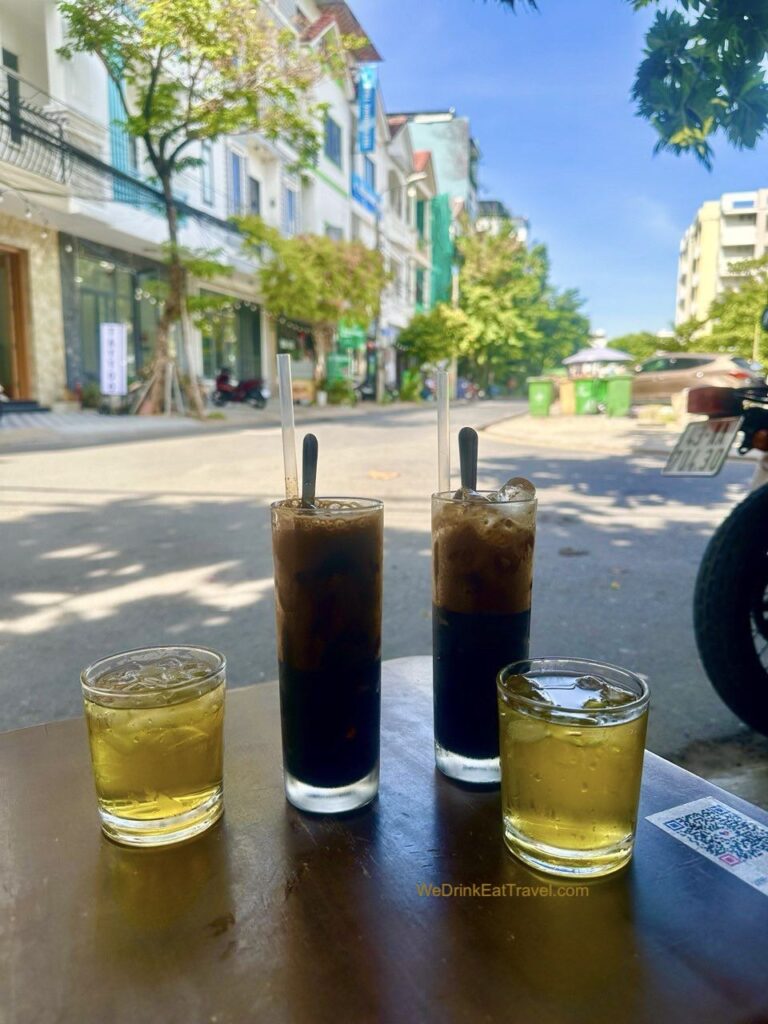
This is the regular black coffee… which when you think of all the different coffee variations, it sounds boring! But there are different coffee types such as Arabica, Robusta, Weasel and blends.
When we go out for coffee, it’s normally a cà phê đen that we have – without sugar. The robusta is a favorite and it’s even better when it has the slight hint of a chocolate aroma running through it. Unfortunately in Southern Vietnam we rarely come across this type out at cafes. Yet, in Central Vietnam this is more common, from our experiences anyway.
Oftentimes this style type of Vietnamese coffee is made using a phin filter. Check out our blog post about making Vietnamese coffee with filter. And, unless they have them pre-pared, be patient as you wait for your coffee to drip through.
Vietnamese Coffee With Condensed Milk, Ca Phe Sua
As mentioned earlier, having sua/nua in your coffee could mean that it’s milk or condensed milk.
If we have this version, we prefer it with condensed milk, as we think it has a better flavor. And, we prefer it iced (da).
In some places they’ll mix the condensed milk in with the coffee, then serve it to you. So, then all you have to do is enjoy.
In other places they put the condensed milk in the bottom, then pour the coffee on top. And then you can mix it together yourself…
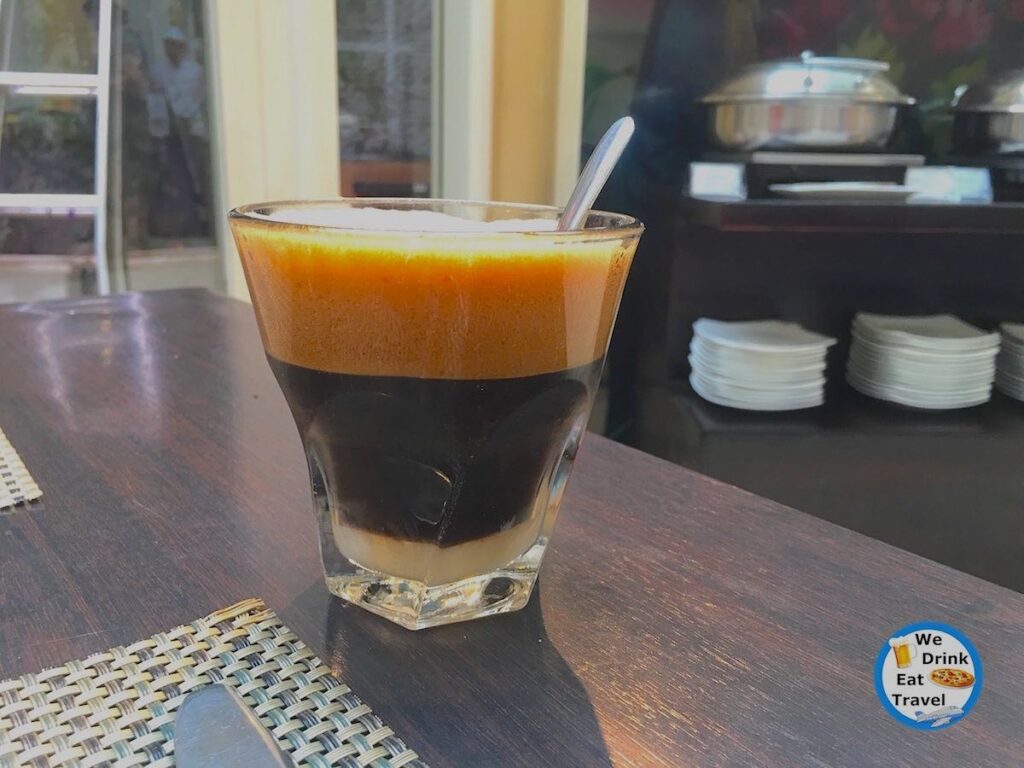
The result is a sweet coffee treat, and most times we’ve found that the sweetness is not overpowering. So this allows the coffee flavor to still be enjoyed.
TIP:
When we were in Da Nang, a coastal town in Central Vietnam… I’d noticed on a menu that there was a Ca Phe Sua Da and a Ca Phe Sua Da Saigon. When I asked what the difference was, I was told that the Saigon version was bigger.
Save on Activities for Your Next Trip
Trying the many different coffees in Vietnam one of the many things you can experience here. But what else can you do? Michelin-Guide street food tours, explore hidden alleyways on bicycle… through to local food cooking classes, exciting trips to Ha Long Bay, and more. CLICK HERE or below to find your adventure!
Vietnamese Coconut Coffee, Cot Dua Ca Phe
Out of all the coffees we’ve tasted, the coconut coffee is a rival for the top spot of flavored Vietnamese coffees. If you’re ever in the area of West Lake Hanoi also known as Tay Ho, there is an awesome little coffee shop called Tapies.
Tapies is a must try if you’re in the area. Not only is the service great, the coffees are magnificent and care is taken to produce them. Check out the funky glass that the coffee is in!
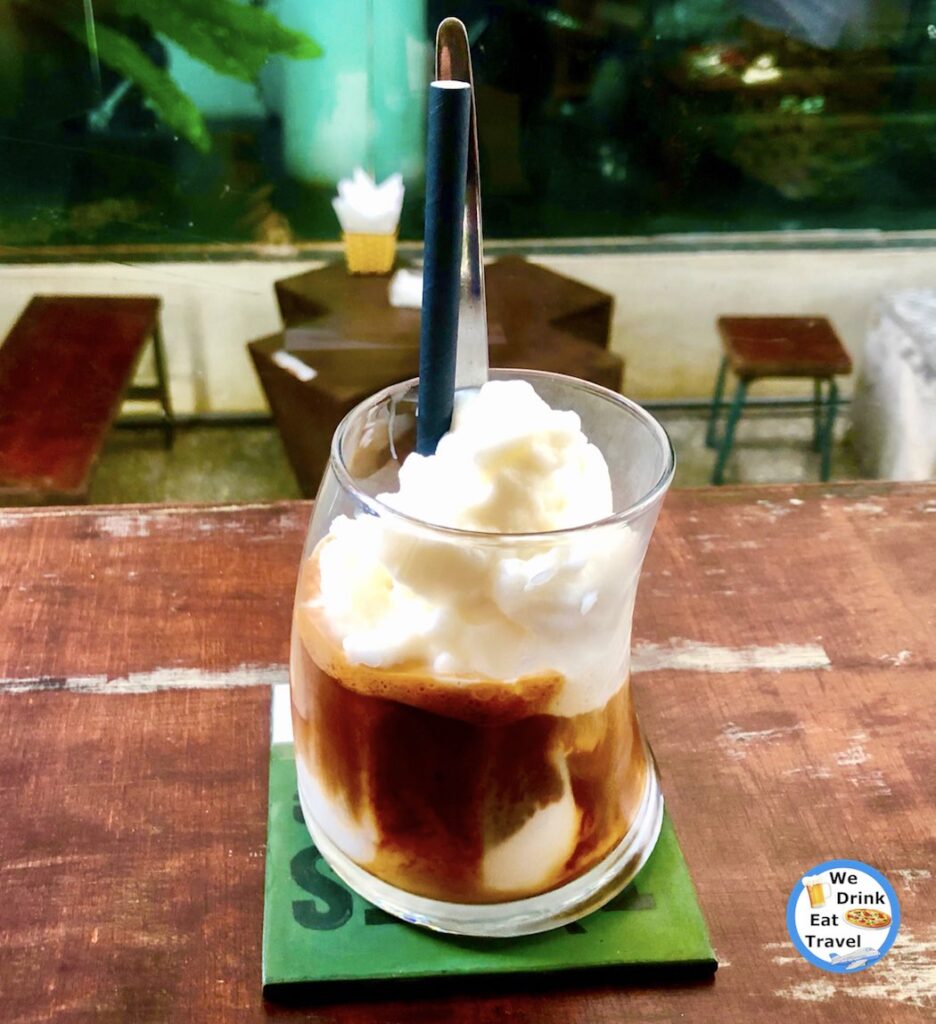
Needless to say, we definitely went to flavortown when we had this coffee. Yes, what you can see on top are big dollops of coconut ice cream, yet it wasn’t too sweet to overpower the coffee. And there was a hint of condensed milk and ice added as well.
It really was an amazing coffee for us to have.
Writing this blog post is making me crave a Vietnamese coconut coffee now! So I better keep writing…
Vietnamese Milk Coffee, Bac Xiu
If Vietnamese coffee is a bit too strong for you, bac xiu is an alternative one to order. It’s a Saigon classic that’s mostly milk, either with condensed milk or standard milk, and just a splash of coffee. It’s much gentler than ca phe sua da, if you’re worried about getting the jitters!
TIP: In Ho Chi Minh City, bac xiu is on nearly every café menu, often listed as “bac xiu da” for the iced version.
Vietnamese Avocado Coffee, Ca Phe Bo
When Paul and I were staying at An Phu Apartment, in the Ben Nghe ward of District 1 Ho Chi Minh City… about 1km away was a café we’d heard who did avocado coffees!
So one day we went for a wander to a place called Shelter Coffee & Tea. They have 2 cafes, and the one we went to was on 13 Le Thann Ton Street.
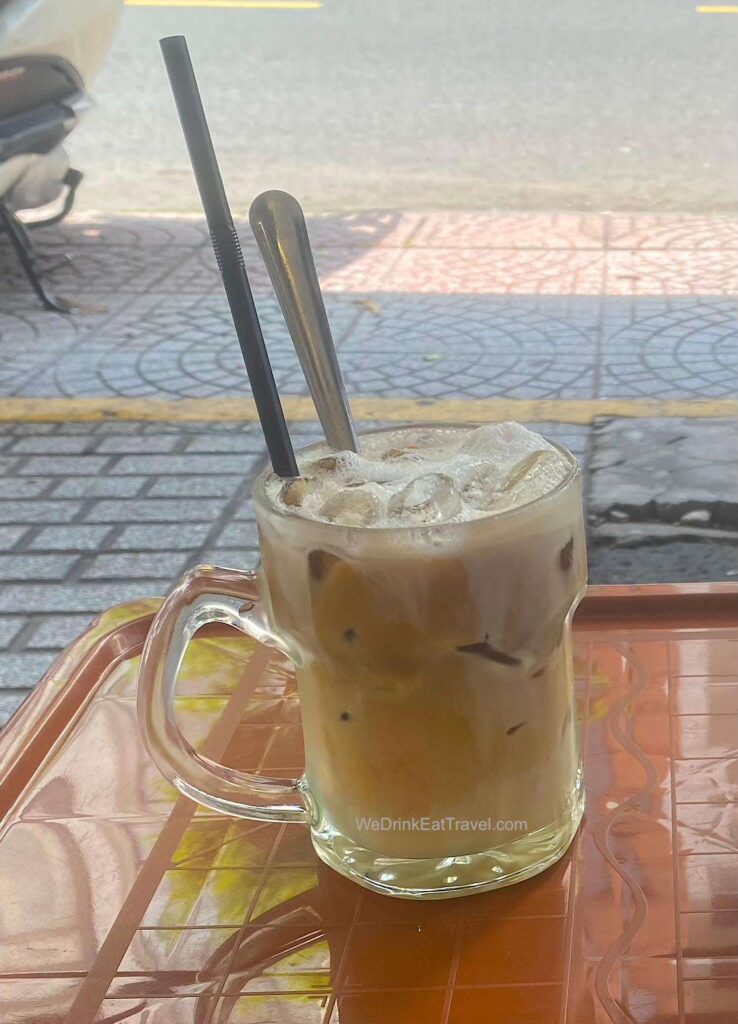
We make our own smoothies with avocado, which gives it a creamy texture. So we were expecting the avocado coffee to be similar.
And when we got there, we weren’t disappointed. Like the Vietnamese coconut coffee, there was condensed milk in it to give it a slightly sweet flavor.
Vietnamese Egg Coffee, Ca Phe Trung
Yep, you read that right… egg coffee. While you’re thinking about it, the images in your mind will be making your stomach churn with disgust. Yet, have an open mind as this was an excellent coffee.
While the key ingredient is a whipped egg yolk, other ingredients are added to the coffee. The ingredients varies depending on the café. We tried the hot version, and it came out with a creamy layer, which was oh so delicious!
Then, when we mixed all the ingredients together it was a match made in heaven.
We had the opportunity to try the original egg coffee in Hanoi Old Quarter at the infamous Cafe Giang…
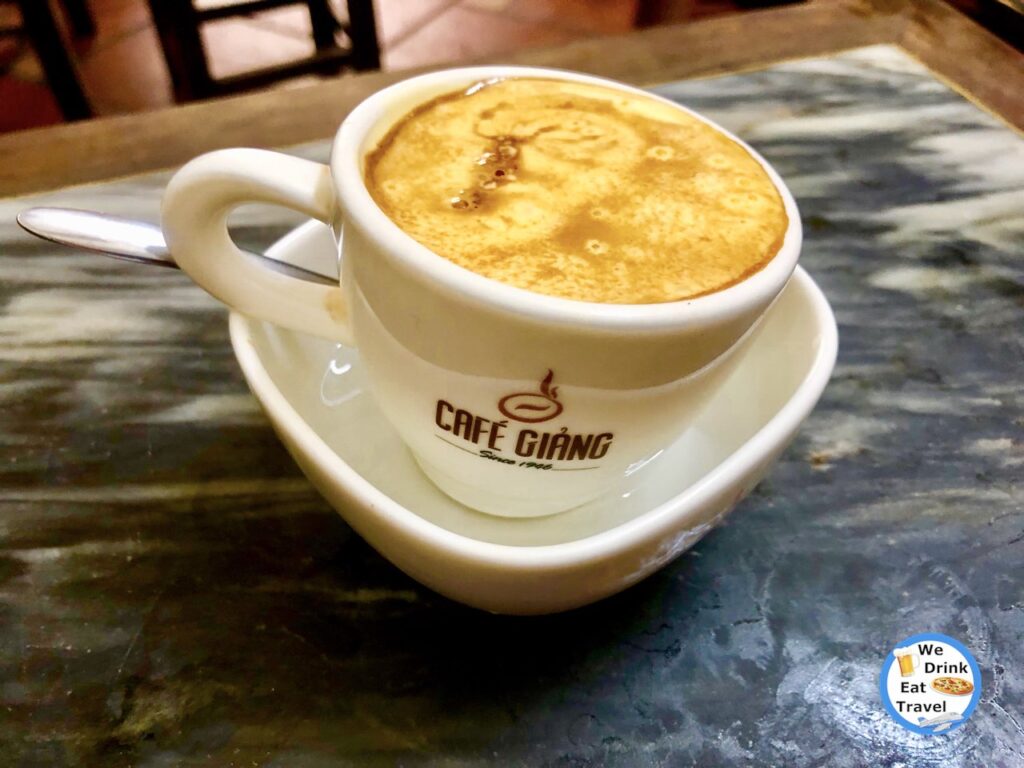
To find out more about the Vietnamese egg coffee, check out our blog post HERE.
There are many other varieties we found including yogurt coffee, durian coffee, cheese coffee, and more. Plus, there are boutique places that make coffees on the spot according to your preferences!
Vietnamese Salt Coffee, Ca Phe Muoi
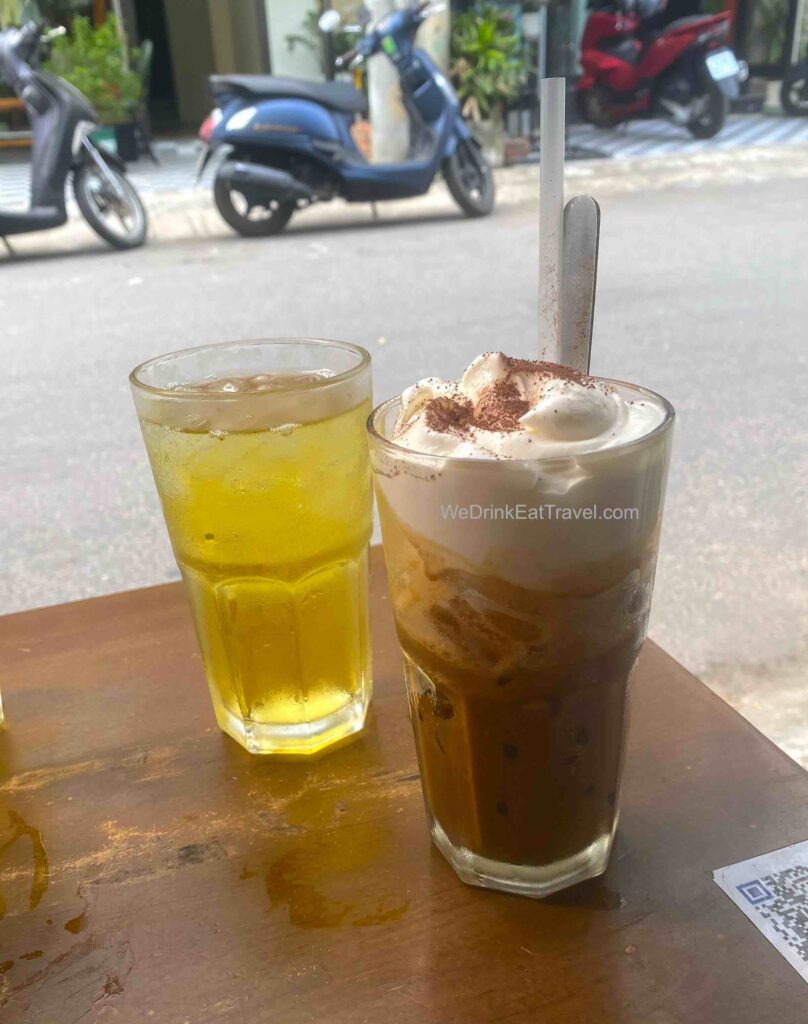
When we want to indulge, our favorite is a salt coffee. Salt in your coffee sounds strange, but this Hue speciality works. A pinch of salted cream sits on top of a sweet, strong coffee, and the salt takes the edge off the bitterness. It’s one of the more unusual types of Vietnamese coffee you can try. Some like to add a hint of caramel to make it even more flavorsome.
When done right, this is a decadent beverage and that salted cream is addictive!
Vietnamese Coffee by Region: North, Central and South
Coffee in Vietnam isn’t the same from one end of the country to the other. The names, the sweetness and the specialities all change as you travel. Here’s what we’ve noticed on our trips.
Northern Vietnam (Hanoi)
Hanoi is the birthplace of egg coffee. It was a creation in the 1940s when fresh milk was hard to get, so whipped egg yolk was a replacement, and you can still try it in the Old Quarter. Hanoi is also where you’ll find yogurt coffee (ca phe sua chua).
TIP: In Hanoi, coffee with milk may be listed as ca phe nau (brown coffee) rather than ca phe sua.
Central Vietnam (Hue, Da Nang, Hoi An and the Highlands)
Central Vietnam is where a lot of the country’s coffee actually grows. The Central Highlands around Buon Ma Thuot produce a lot of Vietnam’s coffee, mainly Robusta, and Da Lat is known for Arabica. Hue is famous for salt coffee (ca phe muoi), which has since spread to Da Nang and Hoi An.
Southern Vietnam (Ho Chi Minh City)
The south loves its coffee sweet and cold. Ca phe sua da is the classic order, and bac xiu is on nearly every menu. Plus, what we’ve found is that the coffee flavor is more aligned to a Western style. Regardless, it’s always fun having a coffee at one of the iconic pavement cafés on the tiny plastic stools.
Plan Smarter, Travel For Less
Now that you have your trip inspiration, it’s time to start planning the logistics. To help you cut down on costs and stress, we’ve put together our top-tier travel tools in one convenient place. You can easily compare accommodation rates, secure reliable airport transfers, grab convenient eSIMs, and lock in peace-of-mind travel insurance. Head over to our curated travel resources to map out your perfect itinerary and keep your budget in check.
Vietnamese Coffee Tips: What to Know Before You Order
You’ll usually get free tea. Many places bring a glass of tea with your coffee, and it’s free, so don’t worry about being charged for it. There are many different varieties of tea too that we’ve had, and they’re all so delicious too.
Vietnamese coffee is strong, so plan for the caffeine kick. Vietnamese coffee is mostly Robusta, which is bolder and higher in caffeine than the Arabica most of us are used to. If you’re sensitive, order a smaller size or try bac xiu, the milky version.
Ask for less or no sugar. A cà phê đen will usually have sugar in it, yet we don’t want it. And for some people, yes it may be too bitter or strong – but that’s how we like it and it’s healthier too! It seems that locals are getting used to tourists asking for no sugar!
Sit down and stay a while. Café culture here is realxing in Vietnam, and no one will hurry you out. Some will even continue to top up your free tea throughout your stay. Plus, plastic stools on the footpath are part of the fun, especially if you’re a tall person – ha ha!
No tipping needed. No need to worry about tipping, even at the upmarket cafés, so don’t feel pressured. Vietnam isn’t like some other parts of the world when it comes to tipping.
Plastic versus glass cups. Many places will serve your coffee in a plastic cup even when you ask to have it “dine in.” Our preference is to not drink from plastic and yes, we even avoid trying places if that’s the only option. So, if that matters, remember to ask first.
Use a translation app. When you’re at a place where not even one word of English is spoken, make sure to have a translation app ready. It avoids confusion most of the time and helps for a more enjoyable experience.
How Much Does Vietnamese Coffee Cost?
From a side street vendor, expect to pay from about 15,000 VND for a basic Vietnamese coffee; that’s about USD $0.60, 0.50 Euros, 0.45 GBP, 3.90 CNY. For coffees at a café the prices will vary. But expect to pay from about 30,000 VND and upwards for a basic coffee. When you think about it though, it sure is incredibly cheap for a great brew! Also, you may fall into the trap of thinking that if a coffee is more expensive, it’ll be better flavor and quality – that isn’t always the case as we’ve experienced!
Final Thoughts
We’ve been fortunate on our travels in Vietnam to try a huge range of coffees, and the types of Vietnamese coffee you’ve discovered here are only the start. Our personal preference are the coffees from Central Vietnam – rich, flavorful and robust. Yet, if you’re a coffee lover you’ll absolutely love it here in Vietnam. So feed your coffee wanderlust and ENJOY!
Check These for Travel Inspiration and Tips
10 Free Things To Do In Vietnam
You’ll Kick Yourself If You Miss This Street In Ho Chi Minh City
5 Top Tips Before You Do A Vietnam Currency Exchange
Our Horrible Hanoi City Taxi Scam Experience
7 Tips For Handling A Vietnam Taxi Scam
Ho Chi Minh Nightlife – If You Love Beer This Is A Must Visit Bar
My Shocking Experience At A Vietnamese Market
7 Bars In Hanoi Old Quarter To Check Out